Pike Robotics
Mechanical hardware for tank inspection
At Pike Robotics, I worked on an existing inspection platform as the team prepared it for deployment. My role combined mechanical design with shop work and hands-on troubleshooting. Each new component needed to fit the surrounding hardware, be practical to fabricate, and remain accessible once installed.
Responsibilities and approach
I worked on mounts, protective structures, tether interfaces, retention hardware, and electronics packaging. My involvement followed parts from the CAD model through fabrication and installation, including the adjustments needed when the first version did not fit or function as intended.
Because the robot was already assembled, new components had to work around existing plates, mounting points, cables, and equipment. I checked those interfaces during installation and used the findings to revise the design. This meant considering the assembly sequence and how a part would be removed for service, as well as its final position on the robot.
Gas-monitor and camera integration
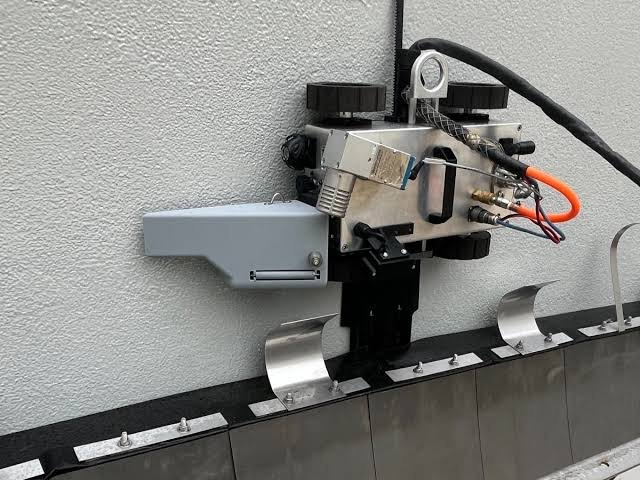
One assignment was a side-mounted gas-monitor assembly built around a sheet-metal frame and smaller 3D-printed brackets. I revised the layout to fit the robot’s existing plates and clearances while preserving cable routes and access to the monitor for replacement.
I also supported an external camera installation when the intended internal arrangement did not have enough room. These projects involved more than finding somewhere to attach the equipment: the mounting hardware had to avoid neighboring assemblies, leave fasteners accessible, and allow the equipment to be installed and maintained.
Tether supports and magnetic retention
I developed and refined tether pinch and strain-relief features, feeler-rod supports, replaceable printed guides, and a servo mount with better fastener clearance. I also worked on a clamp-style magnetic stopper using small fasteners and heat-set inserts. The designs needed to hold components in position without making adjustment or replacement unnecessarily difficult.
On the rear magnetic retention system, I worked on a revised arrangement of six external magnets and the features needed to retain and align them around existing attachment points. Some of the original hole locations did not match the new hardware, so installation included drilling, tapping, and jig-based alignment work.
Fabrication, fit, and service access
I made and fitted parts using FDM 3D printing, laser-cut acrylic, sheet metal, drilling, tapping, and hand fabrication. I accounted for printed-part shrinkage and checked how threaded inserts, fasteners, and mating surfaces affected the assembled fit.
Fit checks covered clearance, alignment, sealing, tool access, and assembly order. Where a component was difficult to reach or replace, that was a design issue to address before deployment. Keeping guides and brackets replaceable was particularly useful when testing revealed a weak point or a part needed another revision.
Testing and deployment preparation
I supported assembly checks, bench testing, troubleshooting, and design reviews as the platform moved toward deployment. I also assisted with gas-monitor bump testing, safety documentation, and the deployment checklist.
When a fit or retention problem appeared, I documented the issue, revised the hardware, and checked the replacement during installation. Some work involved rapid repairs to keep the platform ready for use. That experience connected the design work to the practical demands of preparing equipment for a field job.